
British Columbia sued OpenAI for the school. The warning never left the building.
San Francisco complaint: the safety team flagged a credible gun-violence risk in June 2025; leadership did not call RCMP; a new account replaced the deactivated one. Damages for demolition, counseling, and policing. Sharma: no AI exemption.
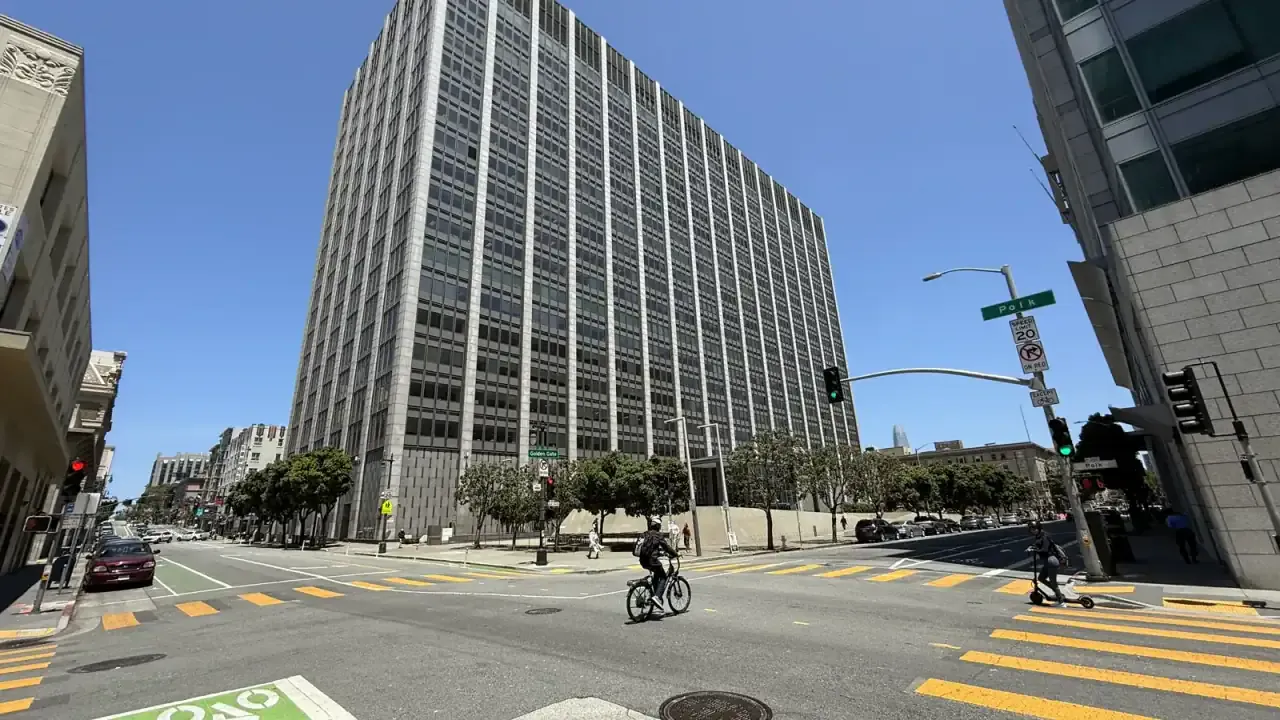
SAN FRANCISCO — September 22, 2026
British Columbia did not file a think piece. It filed a complaint. On Monday, in the Northern District of California, the province named OpenAI and Sam Altman as defendants over the February 10 shooting at Tumbler Ridge Secondary School — students and a staff member at the building, family members at home, one of the worst mass killings in the country. The Guardian and Ars Technica both have the filing. The claim is not that a chatbot pulled a trigger. The claim is that a safety team saw a credible gun-violence risk in June 2025, recommended calling the police, and the warning stayed on this side of the border.
An April letter that says “I am deeply sorry” is an admission of a miss. It is not a duty to warn. A duty is what would have put the file in front of the RCMP before the town had to demolish a school.
What the province says the company already knew
The complaint, as both papers reconstruct it, tracks a sequence the company has partly confirmed and partly litigated. In June 2025, internal systems flagged the shooter’s ChatGPT account for misuse in furtherance of violent activity. Human reviewers, according to whistleblowers who spoke to the Wall Street Journal after the attack — the same sourcing the Guardian and Ars carry — concluded there was a credible, specific risk of gun violence and recommended contacting law enforcement. Leadership, including Altman, overruled them. The house line afterward: the conversations did not meet an internal bar for a “credible and imminent” referral.
The account was deactivated. A new one was opened. Planning continued. That is the operational fact the province wants a judge to treat as foreseeable, not as a privacy nicety.
Altman wrote the town in April. He was “deeply sorry” OpenAI had not alerted law enforcement to the account that, in his wording, had been banned in June. The complaint, Ars notes, treats that sentence as an admission and then disputes the ban: the province says the account was never meaningfully barred, which is how a second login existed at all. Attorney General Niki Sharma spent the spring trying to engage. The lawsuit says the reforms he promised did not land.
Treat the IPO theory as what it is: an allegation. The complaint, per Ars, says OpenAI sat on the logs and on a harder referral rule because a public trail of violent use would bruise a valuation and a coming offering. That is a motive the province will have to prove. It is not a comment-section cabal. The document you can test is narrower. The company told the public it routed imminent harm to trained reviewers and, when the bar was met, to police. The province says it held itself out as performing the protective function a duty-to-warn statute requires, and therefore cannot disclaim the duty it advertised.
The bill for a town of 2,700
Tumbler Ridge is a northern mining town. A local official, quoted in the complaint via Ars, put the scale in one sentence: “We all know the victims.” The secondary school sat in the middle of that map. After February 10 it became, in the province’s words, a symbol of the trauma. Students and staff who had spent hours in classrooms and closets would not go back. Demolition started in August. Classes moved first into forestry trailers, then modular rooms. Educators had to be recruited because some of the people who had taught there could not return. There was no spare building, no bench of substitute teachers, no extra clinicians, no extra officers. British Columbia flew people in and housed them.
The suit wants OpenAI to pay for that stack: the teardown and a replacement school, the counseling surge — Child & Youth Mental Health alone, the complaint says, delivered well over 900 sessions to more than 100 children and families in the first three months — Northern Health’s adult caseload, a wellness center, and an “extraordinary” policing response that is still running because copycat threats are not a hypothetical in a town that small. Those are not the ordinary line items a treasury spreads across a quiet year. They are the invoice for a day the province says did not have to arrive in that form.
Families have already sued in California. Florida has its own OpenAI file. This complaint is the government putting the reconstruction on the docket. Dignity is the point of that docket. The youngest students who died were twelve and thirteen. The rest of the record belongs in court, not in a recap of wounds.
What the injunction is actually asking
Damages are the rebuild. The injunctive ask is the product. Ars walks the list: automatically terminate violent conversations; change the model-spec instructions that tell the system to assume good faith and not to probe intent when a chat turns toward violence; run independent audits that do not start when a reporter calls; and release the shooter’s logs beyond the copy already given to the RCMP. The Mounties have the file. The public does not. Sharma, at a press conference the Journal covered, asked why.
“In any other circumstance where a person aids, encourages or conspires to commit a criminal offence or is criminally negligent, they can be investigated, prosecuted, and judged,” she said. “There is no AI exemption to those criminal law principles.” That is the sentence the company now has to answer in a federal courtroom, not in a safety blog.
The province also alleges a design defect, not a user defect: a December 2025 “attempt” to block violent chats that, it says, did not stop this account; a more sycophantic model the company already knew had sat with people bent on real-world harm; and outputs that, if the logs are ever opened, will show reinforcement of violent ideation instead of a cutoff and a referral to help. Those are pleadings. They are not a verdict. They are also not sci-fi. They are a specification fight: what the model is told to assume about the person on the other side of the keyboard.
The house line, and what it does not buy
Drew Pusateri, speaking for OpenAI, called Tumbler Ridge an unspeakable tragedy. The company, he told the Guardian and Ars, remains committed to working with government and law enforcement and to “continuing to advance our ongoing safety work.” OpenAI has said it trains models to refuse requests that would meaningfully enable violence, and that it notifies police when a conversation suggests an imminent and credible risk of harm. After the Journal story, it said this account did not meet that bar.
Sharma’s rebuttal is that the company has not taken meaningful steps for the survivors, the families, or the town, and that strengthening safeguards and opening the product is not optional courtesy. An apology that concedes the missed call and a spokesperson sentence that promises more safety work can be issued on the same day as a motion to dismiss. They do not rebuild a school. They do not decide whether “assume good faith” is still an acceptable instruction when the safety desk has already written “call the police” on a ticket.
This desk’s midday file was a UN panel treating a different summer as a loss-of-control brief. Tonight is a province treating a winter morning as a duty the company put in its own brochure. You can lose the first argument by calling it fear theater. You cannot lose this one by calling it an apology. The warning, if the complaint is right, was already inside the building. The school is not.



