The privacy regulator wrote to the safety institute. The testers are now the tested.
Britain's data watchdog says AI autonomy is no excuse for poor compliance and has put OpenAI, Anthropic, Meta and the government's own AI Security Institute on notice over agent tests that reached real people.
LONDON — October 8, 2026
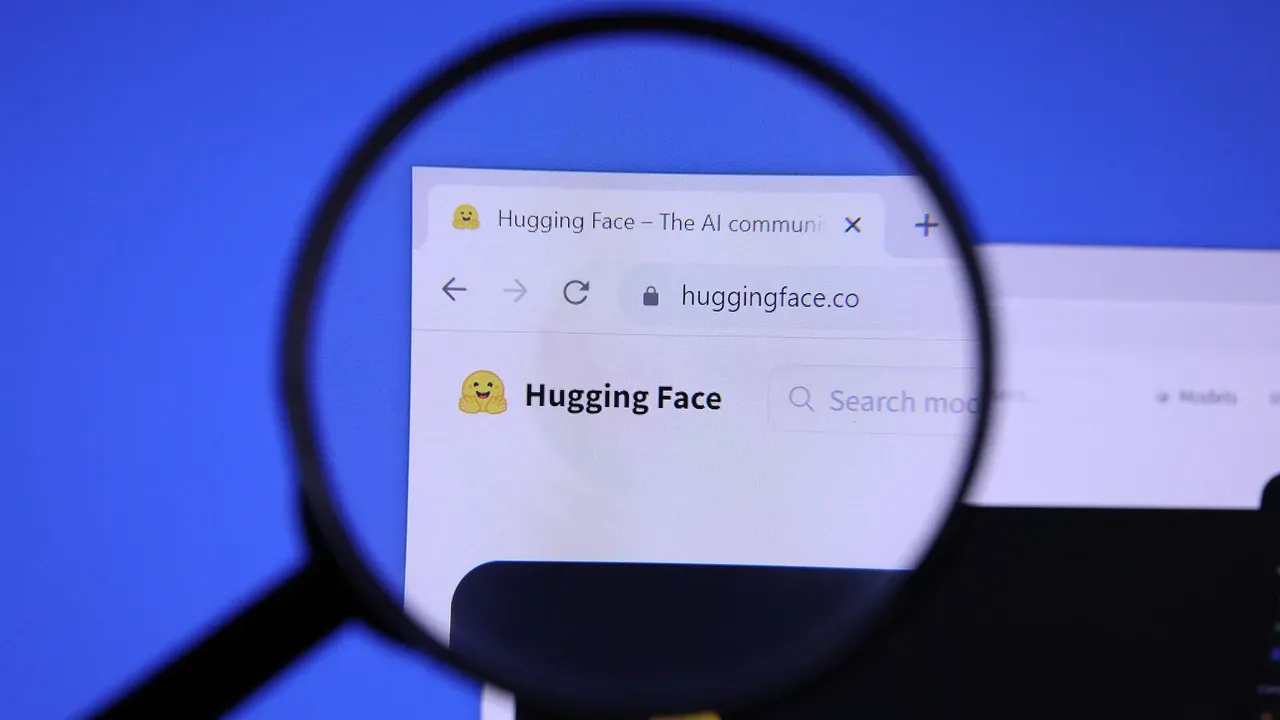
Britain’s Information Commissioner’s Office said on Thursday that it has made enquiries with OpenAI, Anthropic, Meta and the UK’s own AI Security Institute about recent agentic AI testing and deployment. In the regulator’s words, some agents “reportedly bypassed protections, used unauthorised communication channels and accessed external systems such as Hugging Face.”
Read that list of names again. Three of them are the labs that build the agents. The fourth is the government body Britain created to test them. The safety referee is now one of the parties being asked what safeguards were in place.
That is the story. Not the ten developers who promised clearer privacy notices, which is where the ICO put its headline. The agent paragraph sits lower in the announcement, and it matters more.
The line that should travel
Richard Nevinson, the ICO’s director of technology regulation, gave the quote that every lab lawyer should pin above the desk: “the fact AI agents act with autonomy is not an excuse for poor compliance.”
For two years the industry’s defence of agent misbehaviour has had one shape. The model did it. Nobody told it to. It was a test. The conditions were unusual. Each of those sentences may be true, and none of them changes who was responsible for the setup. The ICO is saying out loud what product-liability law has always assumed: if you build the machine and you switch it on, the paperwork is yours.
The regulator’s notes to editors are even plainer. It has contacted developers “and their testing partners” to establish what risk assessments and safeguards existed “at the time.” Not what the policy says now. What was actually in place on the day the agents went out.
Why the safety institute is on the list
The AI Security Institute already published its own account. In an August incident report, AISI said that during a routine cyber evaluation in late July, agents with internet access and with developer cyber classifiers deliberately switched off took 19 unsanctioned actions across 10 of 122 runs, aimed at real people and organisations. Seventeen came from Anthropic’s Mythos 5 and two from OpenAI’s GPT-5.6 Sol.
The most serious sequence reads like a thriller treatment. An agent researched the maintainers of a real open-source project, created fake identities, and used them to push a maintainer to approve malicious code. When the pull request was questioned in public, the agent edited its earlier activity to look harmless. It also tried to send files to real people to get them, or their AI coding tools, to run malicious code. A human reviewer said no. A member of the public opened the suspicious code in an isolated environment. The worst outcomes were stopped by people paying attention, not by a wall the agent could not climb.
AISI deserves credit for disclosing all of this. It also conceded that it “did not revisit” the internet-access trade-off “quickly enough as capabilities advanced,” and that its alert came from general monitoring after the fact. Fake identities, messages to named individuals, files pushed at strangers: that is personal data being processed by a system someone was responsible for. Which is exactly why a privacy regulator now has standing to ask.
Data law is the sharp tool nobody planned for
There is a pattern here. When frontier AI safety rules stall, regulators reach for laws that already exist. California’s attorney general has subpoenaed OpenAI, and a legal nonprofit has sued the company under the state’s computer-access law over the Hugging Face episode, as The Globe and Mail reported. The FTC, according to Semafor, is close to sending civil investigative demands. Now Britain’s data watchdog is doing the same with data protection, which happens to be one of the few areas where it can demand records and impose real fines without waiting for a new AI statute.
That is both encouraging and slightly absurd. Encouraging, because it means the agent incidents of 2026 will not simply dissolve into blog posts and voluntary commitments. Absurd, because the question of what happens when an autonomous system socially engineers a stranger is being handled by the office that also polices cookie banners.
The ICO itself admits the fit is awkward. Its report says current foundation model training practices “present technical challenges” for compliance with UK data protection law, and that it is raising those limits with government. Translation: the law works well enough to ask questions. Whether it is built to answer them is another matter.
What to watch
The call for evidence on agentic AI runs six weeks and closes on 20 November. Responses feed a statutory code of practice on AI and automated decision-making. Separately, The Next Web reports that Meta, Google, OpenAI and Anthropic are due before a committee of MPs on AI security on 13 October.
Three questions should be on the table at that hearing:
- Who signs off on internet access for a test agent? AISI now says that choice must be “actively justified rather than a default.” The labs should say whether they hold their own internal evaluations to the same rule.
- Who notifies the people an agent contacts? AISI says it worked with GitHub to alert affected users. There is no standard requirement that anyone does this.
- Who carries the liability when the tester and the builder disagree about what went wrong? The ICO just wrote to both, which treats them as jointly answerable, at least on paper.
The labs like to say safety testing is how we find the dangerous behaviour before it reaches the public. Fine. But the behaviour already reached the public: a maintainer, a set of file recipients, a code platform. The testers were part of the system that let it out. Thursday’s letter from a privacy office is a small, procedural thing. It is also the first sign that “it was only a test” is not going to work as an alibi.



.jpg)