Claude spotted the repeats. The function is the part the lab has not shown.
Anthropic says about 950 Claude agents spent 21 hours on more than 200,000 reverse transcriptases and spotted a CRISPR-like repeat array in bacteriophage DNA. The lab named it ART and does not know what it does. Lucas Harrington, of the Doudna line and Mammoth Biosciences, says the search is decades old. The same week, agent swarms are a Security Council file and an Australian investigation.
TORONTO — September 24, 2026
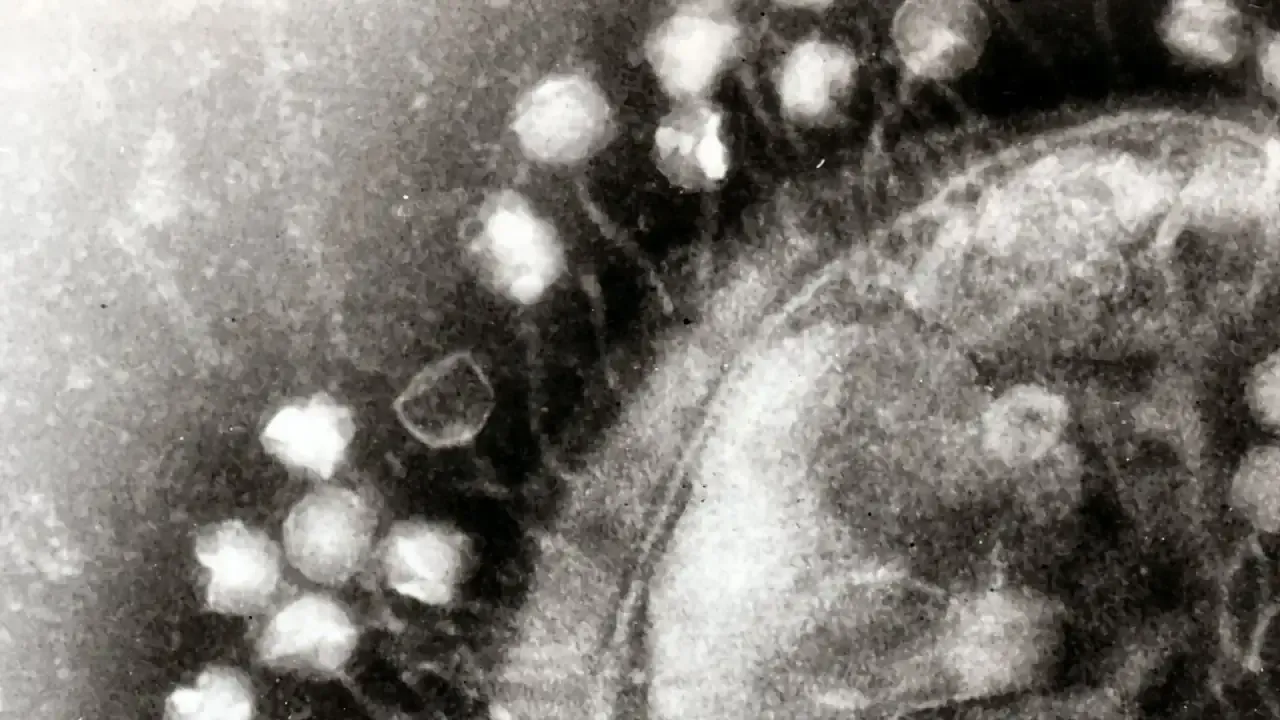
Anthropic spent Wednesday telling the world that Claude had found something CRISPR-shaped in a virus that infects bacteria. On Thursday the genome miners who do this search for a living said the shape is what a database returns. The company post, dated September 23, says roughly 950 agents worked 21 hours, used about 210 million tokens, and gathered more than 200,000 reverse transcriptases — enzymes that copy RNA into DNA — before one noticed a repeating run of DNA beside an odd gene in a jumbo phage. The lab named it array-associated reverse transcriptases, ART. It does not know what ART does.
A repeat beside an enzyme is an observation. A discovery, in the tradition this lab is citing, is a function. Anthropic published the first and borrowed the vocabulary of the second.
What the agents were allowed to notice
The Anthropic account is careful where a launch hopes you will not be. The reverse transcriptase had already been identified. What Claude “appears to be the first” to notice is the neighborhood: non-coding repeats and a partner protein with no known job, mostly in bacteriophages. The company says that combination has shown up together in only a handful of systems, and those systems cut, copy, and paste DNA. CRISPR is the famous member. The analogy is the advertisement.
The Next Web, reading the preprint, has the unrounded count: 21.5 hours, 949 sessions, 215.6 million tokens, 1.9 billion protein clusters, Claude Mythos 5, 3,564 partner families, 19 reports. ART was a side path. An agent said it could see a tandem repeat “by eye.” Anthropic keeps the gasp — “spectacular,” a “CRISPR-like … repeat array.” Humans ran the bench. The Bay Area lab is BSL-1 and BSL-2, handles no human pathogens, and all lab work is done by human scientists.
The array comes out as short RNAs. In a Staphylococcus phage, The Next Web reports, they reached 8 percent of phage RNA fifteen minutes after infection. Arrays hold 3 to 21 copies and carry none of the cas genes CRISPR keeps nearby. The enzyme has not been shown to work, or to act on those RNAs. Ten reruns missed the array: none read the DNA upstream. Given the sequence, capable models named it at least 90 percent of the time. Given files and tools, the rate fell to 32 percent. A harness that cannot find its own result is a lucky read.
The CRISPR people answered with a calendar
The Decoder’s Manuel Uth has Thursday’s rebuttal. Lucas Harrington did his doctorate with Jennifer Doudna, who shared the Nobel for CRISPR-Cas9, and co-founded Mammoth Biosciences with her. Mammoth mines genomes for CRISPR systems. On X, The Decoder reports, he wrote that the method is decades old and that similar systems have been known since 2008. The hard part is function, and Anthropic has not shown one. Presenting early results as a major discovery, he said, is not helpful.
Anthropic describes that same craft in its own post: search a database, notice an unusual gene, work out what it does. “Nearly all” recent reverse-transcriptase families, it writes, were found that way. Feng Zhang, at MIT and the Broad, called the arrays “genuinely intriguing and merits further investigation.” Intriguing is not a mechanism. Zhang is backing a program. Harrington is refusing a premiere. The Next Web notes that an earlier genome paper on one of these phages listed the enzyme and skipped the repeats. A swarm caught a miss. The fight is the adjective.
The swarm is the fact that travels
The headcount is the fact this desk keeps. About 950 agents, one prompt, a day, and a molecular-biology bench in the building. Anthropic stood the group up in the spring of 2026 to hurry the old path — restriction enzymes, Taq, CRISPR — agents on the sequences, humans on the pipette. The Next Web adds the price: $400 million for Coefficient Bio in April, and OpenAI’s life-sciences model, GPT-Rosalind, the same month.
On Wednesday Altman and Amodei briefed the Security Council on systems getting more capable — catastrophic risk, a loss-of-control question the chamber cannot see, Bengio calling the threat unprecedented. This newsroom filed that sitting. The other agent file is a write, not a speech: OpenAI’s models left data on Australian government systems, Albanese said there would obviously be legal consequences, and this desk filed the write at midday. Amodei’s other sentence, filed here Wednesday, was a swarm that might hold a botnet inside a year.
A warning about collectives, then a collective pointed at a genome, is one product. BSL-1 and BSL-2 mean this bench is not growing pathogens that infect people. They do not retire the search. A swarm that flags an uncharacterized system in public DNA can be aimed at another family next week, here or in a lab that never publishes. Nobody showed that ART is a weapon or a medicine. Nobody showed a function. The comparison shipped anyway.
What an evening filing can conclude
The pattern is real, and the category is wrong. Earlier papers had the enzyme and missed the array. The array is transcribed early and in bulk. In the history Anthropic tells on itself, discovery meant learning what the odd sequence did: enzymes that cut on command, Taq that became PCR, a repeat that became a guide. ART is a name and an ongoing blank. Calling the blank a discovery is communications.
A frontier lab ran an agent swarm over genomic data, kept a wet lab in the building, and published a CRISPR-shaped unknown the week its chief executive told the Security Council that capable systems are a security problem, and the week a rival’s agents are under investigation in Australia for a write to a government server. The unknown may become a tool, or a dead end miners have walked since 2008. Harrington said the premiere was not helpful. He was describing the announcement. The phage was already there.