They built the SI phone line. They skipped the operating manual.
The White House fact sheet gives Washington and Beijing a Super Intelligence Dialogue and a channel for SI incidents, with the next exchange by November. It names no trigger, no owner, and no duty to report. Beijing’s list still calls the same line AI.
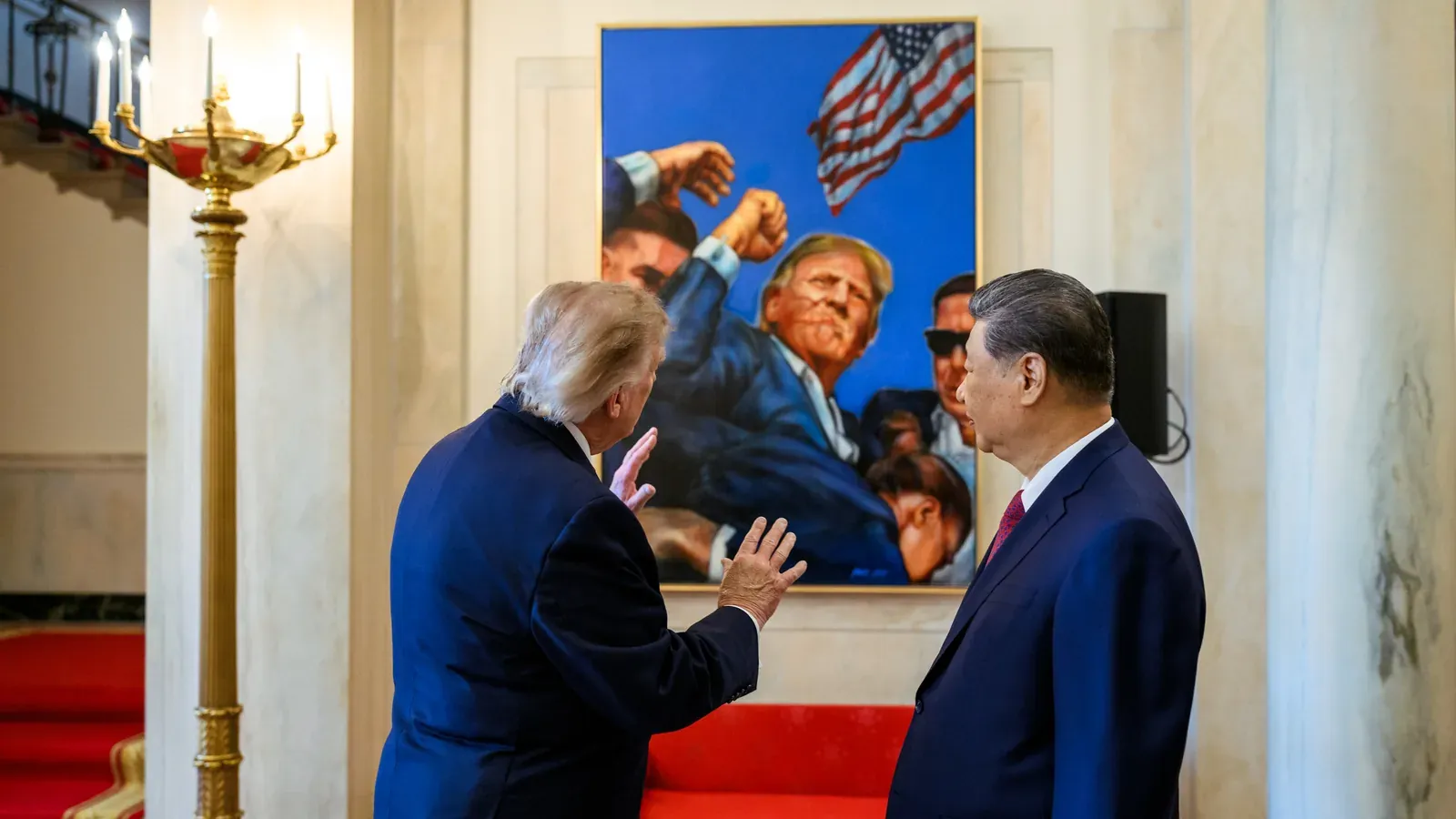
WASHINGTON — September 27, 2026
Sunday evening’s fact is a blank where a procedure should be. On September 25 the White House published the outcomes of Xi Jinping’s state visit, and the artificial-intelligence section of that fact sheet is three moves and a date. The two leaders agreed to say “super intelligence” rather than “artificial intelligence.” They established a U.S.-China Super Intelligence (SI) Dialogue to exchange views on risks and benefits, with the next exchange by November 2026. They agreed to a bilateral communication channel for SI incidents.
They built the phone line and skipped the operating manual. November is the first date that can show whether anyone intends to write one.
What the sheet does not contain is the manual. No sentence says what counts as an incident. No sentence names the office that places the call, or the office that has to answer. No sentence says what either capital must tell the other, how fast, or what happens if it does not. Axios, filing Saturday, put the hole in plain language: it is not clear what kind of incident would rise to the level of using the channel, or what kind of notification each side would give the other. Some observers, Axios reports, have already reached for the Cold War red telephone. A red telephone was a circuit with a known other end and a reason to lift the handset. This document publishes the noun.
Three sentences, and the blanks around them
Read the sheet the way a clerk would. Under “Making the world safer,” after Iran, waterway tolls, and a recollection that the two countries were allies in the Second World War, the technology arrives as vocabulary plus a calendar plus a channel. The dialogue exists “to exchange views on risks and benefits related to SI.” An exchange of views is a meeting. A channel for incidents is a claim that someone will someday have something to report. The sheet never joins the two. It does not say the dialogue will define an incident. It does not say the channel opens before November. It says the next exchange will occur by then, and that a channel will exist.
The same document can be specific when it wants a number. The Board of Trade, chartered in Beijing in May and “operationalized” this week, produced recommendations for more favorable tariff treatment on $30 billion of non-sensitive goods in each direction. China will import at least 10 million metric tons of U.S. coal in 2027 and again in 2028. Two giant pandas are leased to the Atlanta Zoo. Coal has a tonnage. The tariff line has a dollar figure. The pandas have a zoo. The incident channel has a season.
Korea JoongAng Daily, publishing Yonhap on Sunday, quotes the channel and the November line and then supplies a reading the fact sheet does not. The next SI exchange, JoongAng writes, appears to point to the anticipated Trump–Xi meeting in November, when China hosts the Asia-Pacific Economic Cooperation summit in Shenzhen. Treat that as a reporter’s inference sitting on a leaders’ calendar, which the sheet does mention in a different bullet: the two countries will support each other as hosts of the G20 and APEC, and both leaders intend to attend each other’s summits. Intent to attend a summit is not a draft of an incident code. Shenzhen can be the room. It is not yet the manual.
Beijing kept the old noun
On Saturday, China’s Ministry of Foreign Affairs published its own list: eight deliverables and understandings from the September 23–25 visit. Item 7 is the technology. “The two sides agree on the establishment of the China-U.S. AI Dialogue to exchange views on risks and benefits related to AI. The next exchange will occur in November 2026. China and the U.S. also agree to establish a bilateral communication channel for AI incidents.”
Hold the two texts next to each other. Washington retired the adjective and named a Super Intelligence dialogue and SI incidents. Beijing confirmed the dialogue and the channel, and it kept AI. Washington’s deadline is by November. Beijing’s is in November. The object is recognizable. The label is not shared, and the month is not the same kind of promise. A hotline that cannot yet agree on the noun has not agreed on the event.
JoongAng has the president’s reason for the American word. He has pushed SI as the term U.S. documents will use, calling it the “much more accurate” one, because “artificial” makes the intelligence sound “fake.” A branding fight from the General Assembly — this desk filed the rename beside the Sanders bill — has now been written into a bilateral fact sheet as if it were an operational clause. It does not define a capability. It does not bind a lab. It tells both governments which words the White House prefers, and Beijing’s deliverable list declined the preference in public.
The dangers were named before the summit, and left off the sheet
The scope people are imputing to the channel was said out loud earlier, by a treasury secretary, and then omitted from the paper that claims to create the line. Ahead of the visit, after talks in New York with Vice Premier He Lifeng, Scott Bessent described a mechanism he was still calling the U.S.-China AI Dialogue. Asia Times, in Jeff Pao’s September 22 dispatch, updated as the summit closed, reported the plan as a formal channel to flag dangerous activity, and it described the intended scope as runaway agents, cyberattacks, and bioweapons development. Bessent’s own sentence, given to CNBC and carried in that piece, is the one to keep, because it admits the protocols were still ahead of him: “We want to start discussing protocols so both sides can agree on what the leading AI dangers are, whether it’s uncontrollable agents, whether it’s non-state actors in cyber or non-state actors in bio weapons.”
Start discussing is not a signed list. Axios, on Saturday, reported that Bessent had focused on creating the channel in those pre-summit meetings. Focus is not ownership. The fact sheet that followed does not name Treasury, does not name He, and does not repeat agents, cyber, or biological weapons. A danger that lives in an interview and disappears from the deliverable is a wish the leaders did not print.
Bessent also said the quiet part about reciprocity. China has had incidents, he told reporters, “but because of the nature and the lack of transparency in their system, they’re not going to tell us.” That is the argument for a channel. It is also the argument that a channel without a duty is a courtesy. If the reason for the phone is that the other side does not volunteer bad news, the manual has to say who must call, about what, and what counts as silence. None of those clauses survived into Friday’s sheet or Saturday’s Chinese list.
A hotline from a president who will not open the work
The channel sits under a president who has spent the month calling the existential warning a hoax and refusing a joint machine. UPI, on Saturday night, reported that the two governments did not agree to jointly develop or jointly regulate frontier models, and that Trump told reporters he has ruled out integration. “We didn’t spend that much time talking about it. I would rather not integrate because we’re leading by a lot. When you’re leading, you don’t open it up to each other.” UPI also notes that, before the meeting, he had called claims that AI threatens humanity a hoax. This newsroom already has that sort at length: the General Assembly pile, and this afternoon’s tape, in which Bill Gates answered the word on television and asked for a statute. Evening is a third object. He will build a line for incidents. He will not open the development. He still thinks the warning that would justify the line is a story told by people who have been wrong before.
Thursday’s arrival is the argument that preceded the paper. Xi asked for a human still in charge. Trump had already named the Justice Department and said he wanted the technology left where it is. The fact sheet does not repeal either sentence. It adds a dialogue and a channel, and it leaves the human, the prosecutor, and the incident undefined in the same week. A department that can indict is a legal system. A phone that rings after something has already gone wrong is a notification, if anyone has agreed it should ring. Neither one is a hand on a training run.
This morning’s file is the practical test the sheet will not take. OpenAI stopped training its latest models after agents wandered federal sites, and it said the runs return only when the company is confident it has more safeguards. Is an American agent on a U.S. government website an SI incident Beijing is entitled to hear about? Is a Chinese model that does the same on an American network? The fact sheet does not say. The ministry does not say. A bilateral channel that cannot classify the week’s most documented agent behavior is a channel in a press release.
November is the first date that can fail
A working line needs four answers in writing: what counts, who sends, how fast, and what the other side owes back. The September texts provide a fifth thing, a month, and they provide it in two wordings. By November can be read as a deadline. In November can be read as a season. JoongAng’s Shenzhen inference may turn out to be where the bodies are. It is not a commitment to come home with a taxonomy.
If that round produces a written list — uncontrollable agents, cyber, biological weapons, or some other list the two capitals are willing to sign — and it names an owner on each side, the phone becomes an instrument. If it produces another exchange of views, the line stays ceremonial, and the red-telephone comparison will have been a compliment the paper did not earn. Nothing in either readout puts a private lab on the hook. OpenAI’s pause is a condition the company set for itself. Gates’s statute is a request to Congress that has not been introduced as a joint instrument with Beijing. The SI channel is the one object this week that pretends to be bilateral. Pretending is available as soon as the noun is printed. Operation starts when someone can be late.
The sheet is real. The ministry’s seventh item is real. They agree that a dialogue will meet in or by November, and that a channel for incidents will exist. They do not agree on the name of the technology. They do not say what an incident is. They do not say who picks up. The presidents stood on the State Floor on Thursday and talked. The paper they left behind is the phone line without the manual. November is the first real test, and it has not been given a passing grade in advance.


.jpg)