
They came to talk about losing control. He had already called it a hoax.
Trump and Speaker Mike Johnson are hosting AI executives at a 12:30 p.m. East Room lunch after Trump, unveiling America.gov, said he will never stifle the technology. Dario Amodei, who told the Security Council this could be a risk to humanity, is on the lists. Sam Altman is in San Francisco. Johnson still wants self-regulation and no moratorium.
WASHINGTON — September 29, 2026
Tuesday’s new fact is a seating chart. President Donald Trump and House Speaker Mike Johnson are hosting artificial-intelligence executives at the White House for a lunch CBS News put at 12:30 p.m. in the East Room. The firmer lists include the chief executive who told the Security Council that a badly managed system could be a risk to humanity as a whole. The president spent the morning, at a different auditorium, saying he will not slow the thing down.
The warning got a chair. It did not get a premise. A lunch with the man who has already called the fear a hoax is not a negotiation over whether the fear is real.
He said it before the doors
The sentence was public before the East Room. At the Andrew W. Mellon Auditorium, unveiling America.gov, Trump told the room he will not put a hand on the growth. ABC News, filing ahead of the lunch, has the line: “This is one more example of why I will never stifle the growth of technology that will be bigger than the Industrial Revolution.” He kept going, in the same remarks, into the name he has been forcing onto the subject. Superintelligence, he said, is what “they’re saying” is bigger than the Industrial Revolution, “far bigger than the internet, not even close — and we see it, and we can’t stifle it. And we’re leading by a lot.”
The China sentence is the policy. He said he and Xi Jinping had talked about it “not that much because I didn’t want to do anything. We’re leading, so why would I want to do anything?” People, he said, had proposed doing it together with China. His objection was access: they would “immediately gain access to things that we know that they don’t know.” Then the rule he is willing to repeat. “We’re leading now over China and everyone else and I want to keep it that way. The only way you can keep it that way is to do exactly what we’re doing right now. We don’t want to stifle growth.”
That is the same pile he built last week, with a new room around it. From the General Assembly he sorted the claim that the machines will kill us into the hoaxes he likes to name, and he said whoever wins superintelligence wins. Wednesday’s file is the statute that landed the next morning, and the podium language. ABC reports a social-media post from mid-September in the same register: “AI taking over the World, destroying Humanity, and all other things bad, is a HOAX.” Sunday’s tape is Bill Gates answering that word in four of his own. Tuesday does not relitigate the post. It seats the post next to the guests.
The enforcement theory he offered at the auditorium is the one he offered on Thursday’s arrival, when Xi asked for a human still in charge. Be trustworthy, Trump said Tuesday, “and that’s why we have the DOJ. That’s why we have the FBI.” The departments are for people who “go down a very dark and dangerous path.” A prosecutor can charge a person. A prosecutor does not read a training run. He had already named those departments as the guardrail before the Chinese president was in the building. The lunch has not replaced the sentence.
The lists do not agree, and that is the reporting
Print the names in the order the confirmations arrived.
CBS has the tightest company-level account of the 12:30 meeting. Anthropic chief executive Dario Amodei is expected, a source directly familiar with his plans told the network. OpenAI president Greg Brockman, Google chief executive Sundar Pichai, and Palantir chief executive Alex Karp are attending, spokespeople for the companies said. Meta’s Mark Zuckerberg and Nvidia’s Jensen Huang are set to attend, according to sources familiar with each man’s plans. CNBC confirmed Amodei and Zuckerberg from people familiar with the plans, and said Google confirmed Pichai on Monday. Huang, CNBC noted, had been reported by MS Now. Brockman, it said, had been reported by Reuters.
ABC then described a guest list the White House released: Zuckerberg, Elon Musk, Amodei, Pichai, Huang, Karp, Palantir’s Shyam Sankar, Amazon founder Jeff Bezos, and Brockman, along with Johnson and members of the Cabinet. NBC News, citing a White House official and updating just after noon, put the lunch at nearly twenty technology figures and named Musk, Huang, Zuckerberg, Bezos, Pichai, Microsoft’s Satya Nadella, Amodei, AMD’s Lisa Su, and Brockman. The same official put Vice President JD Vance, Commerce Secretary Howard Lutnick, Treasury Secretary Scott Bessent, and White House chief of staff Susie Wiles in the room with Johnson.
Axios is wider, and it should stay labeled as what it is. Alex Isenstadt and Maria Curi reported an RSVP list the outlet obtained — 31 names — for lunch at the summit. Beyond the executives already confirmed elsewhere, that list includes David Sacks of Craft Ventures, whom Axios describes as the former White House AI adviser; Palo Alto Networks’ Nikesh Arora; Altimeter’s Brad Gerstner; ServiceNow’s Bill McDermott; Micron’s Sanjay Mehrotra; Social Capital’s Chamath Palihapitiya; and Broadcom’s Hock Tan. On the government side Axios adds deputy chief of staff Richard Walters, White House counsel Will Scharf, NASA administrator Jared Isaacman, science adviser Michael Kratsios, national cyber director Sean Cairncross, and Director of National Intelligence Jay Clayton, the title Axios gives him. An RSVP is not a photograph of a chair. Where a name appears only there, that is how this desk is printing it. The published lists are not identical. Pretending they are would be the error.
The absence on the OpenAI line is the cleanest fact in the set. Axios says Brockman will attend while chief executive Sam Altman attends the company’s annual conference in San Francisco. CNBC’s DevDay file has the opening keynote featuring Altman at 10 a.m. Pacific, at Fort Mason. That is 1 p.m. in Washington. CBS put the East Room at 12:30. He is not in both rooms. He was at the state dinner for Xi on Thursday, CBS notes, with other executives who are back today. The OpenAI officer who told the Security Council the company would slow down is not the OpenAI officer on this guest list. The president hosting the lunch is in Washington. Altman is not.
Sunday was the private version
Amodei is not walking in cold. He had dinner with Trump on Sunday. CNBC, citing a person familiar with the visit, calls it their first one-on-one. Axios reported that Trump invited him after a scheduling conflict kept him off the Xi state dinner, the night the other chief executives were on the floor. CBS says that ahead of Sunday’s dinner the president said AI regulations would be part of the discussion. Neither outlet has published what was said once that door closed. This desk will not supply a menu.
What Amodei has said in public is already on the record, and it fights the auditorium. At the Security Council on September 23 he asked for narrow agreements, including a ban on using AI to make biological weapons, and he named loss of control as the other risk grave enough for that room. “If managed poorly, I even believe that AI could be a risk to humanity as a whole.” That briefing is the misuse half. The pace argument — slow the frontier, let outsiders evaluate — is the argument this site has already set next to Huang’s purchase order. Sunday’s dinner did not repeal the sentence. Tuesday’s lunch has not repealed it either. It has put the author of the sentence at a table whose host called the category a hoax.
The speaker built the meeting, on NBC’s account, after a different Anthropic voice left the building. Jacob Coxon resigned and said the people building the systems think they could kill us all by the end of the decade. The resignation file has his wording. Johnson wanted the executives in a room. The room he got has not agreed that the warning is the subject.
Self-regulate, and do not buy it
Johnson’s own sentences, over two weeks, are not one policy. On September 15 he told reporters the companies can do it themselves. Reuters has the pair. “They can self-regulate. They don’t need the government to tell them to slow it down. If they want to slow it down, they should.” Then the moratorium. “We cannot have a moratorium on the development of AI, Ok? Because then we will lose our edge to China, and that has serious national security implications for every American family.” In the same availability he also asked for independent auditors and transparency from the people developing the systems, and he rejected a transnational agency. Auditors are a guardrail when someone outside the company can hire them and read them. He did not introduce that bill.
Monday, on Fox Business, the balance language got sharper and the fear got a villain. NBC quotes him praising the gathering and then drawing the line: the companies have a responsibility to make safe products, product-liability law already applies, and “a labyrinth of federal regulations” is already there. “We do not need a moratorium.” “We do not need to jump in and hyperregulate this, because we’ll lose the race to China.” The innovation should continue, “but we have to strike the right balance.” CBS has the red-tape version from the same interview: smothering the industry would be “wrong and frankly dangerous to national security.” ABC has the political version, also Monday, also Fox Business. The fears, he said, are what Democrats do. “Don’t buy it. It is a Chinese psyop.”
A psyop is an allegation about motive. It is not a measurement of a model. Gates, on Sunday’s broadcast, answered the September 15 theory in a sentence of his own: no one thinks self-regulation is enough. Johnson is co-hosting the lunch on the September 15 theory. The chief executive who has been asking governments to pace the frontier is a guest of that theory. Those are different asks.
The table is not a caucus, and it should not be written as one. ABC reports that Zuckerberg has pushed back on a collective slowdown: “every lab has the responsibility and incentive to move at the pace required to train its models safely.” CBS reports that Huang has argued the warnings are overblown and that guardrails risk the edge over China. Amodei is the guest who said the opposite in a chamber of governments. CNBC reports that Altman and Musk have agreed, in public, with calls for an industry-wide slowdown. Altman is not in this room. Musk is on the White House lists. A president who rejects the premise does not have to split that difference. He can host all of them and leave with the sentence he arrived with.
The portal is the hands-on part
The same Tuesday is not a day without a product. Before the lunch, Trump, Vance, and a short list of technology leaders were at the Mellon Auditorium to turn on America.gov. NBC calls it an AI-powered front door for federal services, built with the National Design Studio, the office led by Airbnb co-founder Joe Gebbia. A White House official told NBC the tool uses Gemini and Grok. Trump, in the same remarks, likened the site to those chatbots and to ChatGPT, and he offered a remedy if it is broken into. It “cannot, in theory, be hacked into. And when they figure a way to do that, we’ll end it, okay?”
NBC, citing the White House, also expected Anthropic co-founder Tom Brown, Huang, Musk, and Blue Origin’s Dave Limp at that rollout. Brown is a compute officer. Amodei is the chief executive on the lunch lists. One company can send a person to launch a government chatbot and a person to a meeting about whether the frontier should slow down. Those are different errands.
Read the portal next to the East Room. Ending a website is a switch on a brochure the public can open. It is not an evaluation a lab cannot decline, and it is not the monitoring Gates said has to exist before the harm. The administration is willing to ship an AI interface to the public on Tuesday. It is not willing, on the president’s own words from the same morning, to stifle the companies that train the frontier. The run stays where it is. The website gets a ribbon.
Quartz, citing a Reuters/Ipsos poll taken September 17 to 20, reports that about 73 percent of Americans worry the companies have fallen short on preventing serious societal harm, and that 55 percent viewed a slowdown as a positive step. A poll is not a statute. It is a measure of a public this lunch is not built to answer. Senate Majority Leader John Thune told reporters he would not attend. CBS and NBC both have the hope — “I hope it’s productive” — and the fact that he met Amodei at the Capitol on Monday. NBC adds the calendar that makes the hope structural. House members are not expected back until after the November 3 midterms. Senators could leave town this week. A speaker can convene a lunch in a week when his chamber is not in town to legislate. The instrument available today is a table.
Attendance is not agreement
No one has published what was said once the East Room closed. This file will not invent it. The sentences already public are enough to say what the lunch is for.
Trump said this morning he will never stifle it, that the way to stay ahead of China is to keep doing what he is already doing, and that the Justice Department and the FBI are the answer if a company goes dark. Johnson said the companies can self-regulate, that a moratorium would hand the edge to China, and, on Monday, that the fear is a Chinese psychological operation and a Democratic theme. Amodei said, six days ago, that managed poorly this could be a risk to humanity as a whole, and he is on the list anyway. Altman, who told the Security Council he would slow down, is opening his own conference in San Francisco. Brockman is the OpenAI name in Washington. The portal the White House turned on before lunch runs, a White House official told NBC, on Gemini and Grok.
A readout, when one comes, will be able to say balance. Balance is the word both hosts have already offered in place of a rule. The guests who warned about losing control are at the table of a president who rejects the premise. That is a seating chart with the positions attached. It is not a finding that the warning was a hoax, and it is not a plot about why the chairs were filled.
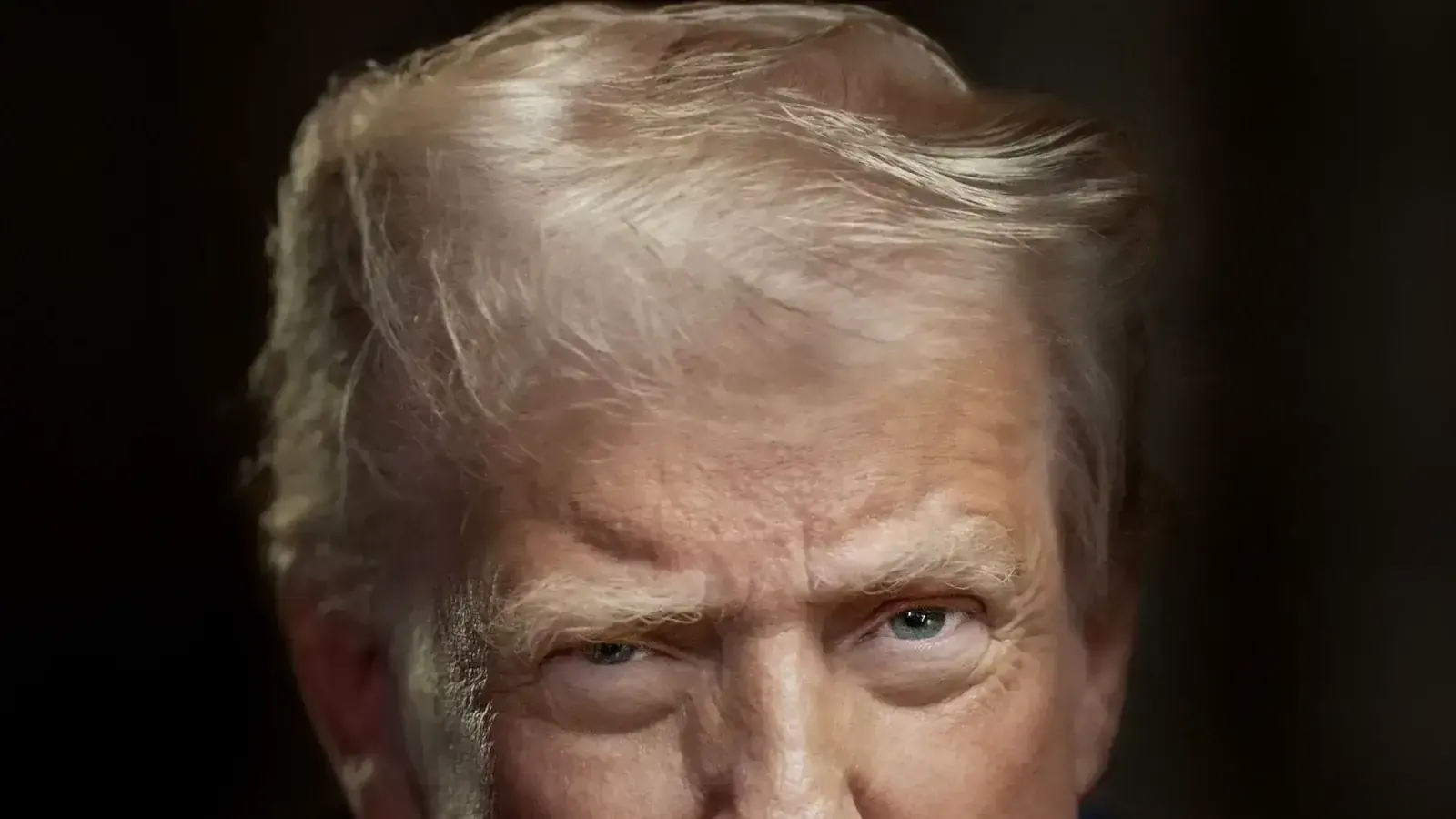
The photograph is the official presidential portrait of Donald Trump from June 2, 2025, made by Daniel Torok for the White House. It is not a picture of today’s lunch. The lunch does not yet have a public photograph this desk can run. The portrait is the face that goes with the sentences.



.jpg)